
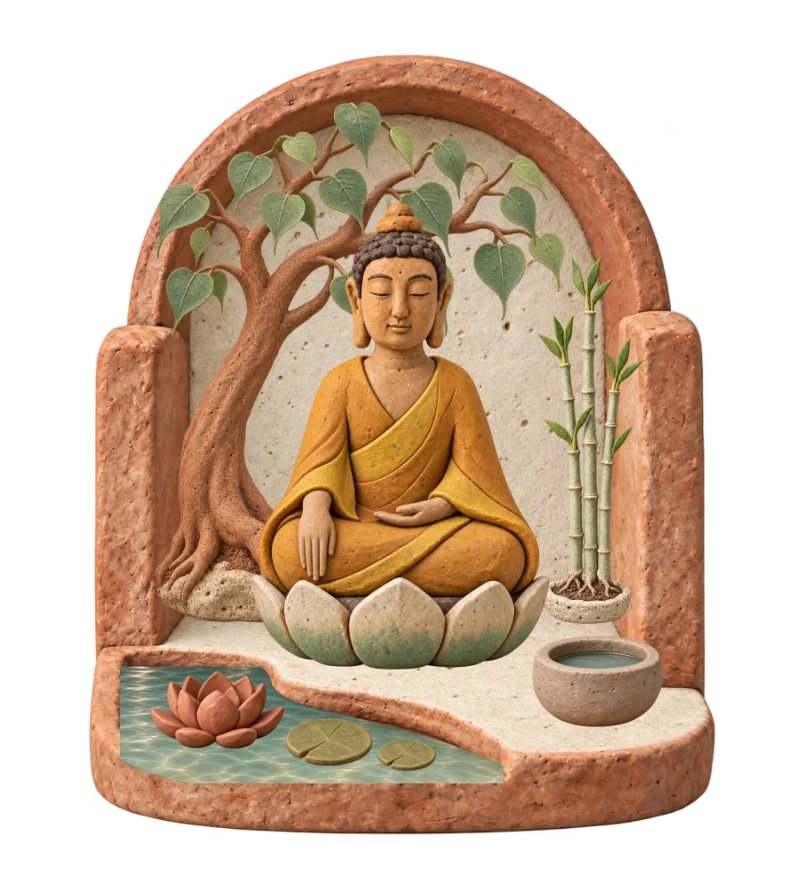
01 / The essentials
What is a digital altar?
A digital altar is a personal space on a screen for meaningful images, symbolic offerings, prayer or reflection. It might be a simple picture or an interactive virtual shrine with incense, flowers and a timer.
Its value is a familiar place to pause. It can accompany a religious practice or a personal moment of gratitude; it does not replace a temple, teacher or consecrated shrine.
Compare the five appsA home altar in a small apartment can be a shelf or image. A digital version needs no dedicated surface.
Symbolic incense and candles work where burning them is impractical.
A pocket shrine can be a familiar point of attention when you travel or move.
For Buddhist practitioners
Three ways of offering. Different kinds of practice.
A bowl of water, an offering held in the mind and a flower on a screen can all direct attention. They are not automatically interchangeable. Buddhist traditions give offerings particular meanings, intentions and forms.
01 / Physical
Something you prepare and give
Flowers, water, light and incense are material offerings. In Bhikkhu Khantipalo’s account of lay Buddhist practice, they express respect and gratitude to the Buddha. Flowers also make change visible as they fade.
Preparing and caring for an altar is part of the activity. The object is not a payment for a desired result. This Theravāda-oriented guide is one account of practice, not a universal altar checklist.
02 / Visualized
An offering cultivated in the mind
In the Tibetan Buddhist teachings presented by FPMT, mental offerings can extend beyond the objects set on an altar. Lama Zopa Rinpoche’s guidance includes mentally offering beautiful things one encounters, alongside actual offerings.
FPMT also provides photographs to support offering visualization. The practice is the intentional mental offering within that teaching; looking at an image is not, by itself, the whole practice.
03 / Digital
A symbol that can prompt attention
A virtual flower or incense interaction is a contemporary screen-based representation. In Little Shrine, it can be a cue to pause, recollect the Buddha or bring your intention to mind.
Our editorial distinction: an app animation is neither a material offering nor automatically a prescribed visualization practice. The cited teachings do not endorse Little Shrine or establish that tapping an offering has the same ritual status or spiritual benefit.
How to choose for your own practice
Begin with the practice you have learned, rather than the interface. If you follow a teacher or temple, ask how images or a digital reminder might fit. Follow their instructions for formal offerings and visualization; an app cannot supply lineage-specific guidance.
With limited space, a meaningful image can simply remind you to pause. If you use a phone, quiet its notifications and connect the moment to an act of generosity or kindness afterward. You do not need to buy virtual objects to begin that reflection.
These examples distinguish traditions; they do not summarize all Buddhist schools. This section is a sourced introduction, not an expert-reviewed ritual manual.

02 / One minute, just for you
A ritual you can try now.
No app required. Use a quiet space, a picture, a physical altar or a digital shrine. This is a personal reflection exercise, not a prescribed religious ceremony.
Pause · 10 secondsSet notifications aside and breathe comfortably.
Choose an intention · 10 secondsTry patience, generosity, remembrance or gratitude.
Make a small gesture · 15 secondsLook at a meaningful image, place a flower, or make a symbolic digital offering.
Connect it to your day · 15 secondsChoose one action that puts your intention into practice.
Carry it with you · 10 secondsTake another breath and return to your day.
For the evening: recall one thing you appreciate, one person on your mind and one kind action for tomorrow.
03 / The app survey
Which digital altar app fits you?
The options fall into three broad groups: interactive shrines, devotional tools and guided mindfulness. We compare them by their main purpose, personalization and support for everyday practice. Start with the experience you want to return to.
What evidence supports this comparison?
Little Shrine: app source and authentic release-22 screen renders with demo data support the product examples below. These are developer materials, not an independent usability study.
The four other apps: the linked publishers’ descriptions and Plum Village’s public practice library support the feature summaries. We have not completed firsthand sessions or captured our own competitor screenshots. We therefore do not compare setup speed, interruption frequency, ease of use or the quality of free access.
Our recommendation is a fit judgment from the documented features. It is not a measured winner in a comparative test.
| Your main goal | An option to explore | Why it fits |
|---|---|---|
| A personal, portable shrine and short symbolic rituals | Little ShrineOur pick for this use case · our app | 18 Asian-inspired figures, customizable scenes, offerings, a timer, widgets and wallpaper. Free basic local prayer. |
| A 3D Buddhist altar with mantras | Buddhist Pocket Shrine | 3D Buddhist figures, mantras, instruments, offerings and scene options. Lists ads and in-app purchases. |
| Buddhist chanting and devotional songs | Buddhist Prayer – ePrayer | A broad, multilingual chanting and devotional song library, with virtual offerings across Buddhist traditions. |
| Guided mindfulness and dharma talks | Plum Village: Mindfulness | Guided practices, teachings and mindfulness bells. Free, with no ads or in-app purchases. A teaching resource, not a decorative shrine builder. |
| Chinese folk worship and almanac features | 心誠則靈 | Digital incense, altars, divination, a traditional calendar and ancestor worship features in a Chinese-language app. |
Which app would you open tomorrow morning?
To sit with a teacher’s voice: Plum Village is our first pick. You can listen to Brother Phap Linh’s guided meditation Taking care of feelings on the publisher’s site before installing. If what you miss from your temple is a familiar chant, start with ePrayer instead. Its publisher lists separate playlists for chants and devotional songs, including Chinese, Vietnamese and Theravāda recordings. Look for the particular chant and language your community uses.
To return to a familiar altar: Buddhist Pocket Shrine and Little Shrine both let you choose a figure, change the setting and make offerings. The deciding detail is what happens next. Moshu-X describes choosing a mantra for the figure and filling offering bowls in a 3D scene. Little Shrine lets you bring your chosen Buddha to your Android home screen and open prayer from a widget. Choose the former for mantra and instrument sounds, or the latter for a shrine you can revisit between everyday tasks.
To follow a household observance: If you use a Chinese almanac or keep an ancestor altar, look at the calendar and ancestor worship features in 心誠則靈. Those are more relevant selection criteria for that purpose than the number of Buddha figures an app offers.
Try a practice before you install
For a visual shrine, open our free browser sample, choose Buddha, place flowers and sit for a few breaths. For spoken guidance, try the Plum Village recording above. Which would you come back to tomorrow: the image that gives you space for your own words, or a voice guiding your attention?
04 / Why we recommend Little Shrine
A small world to make your own.
For a customizable portable shrine, Little Shrine: Prayer & Luck brings the essentials together: a scene of your own, interactive symbolic offerings and a short daily ritual. Here is what that combination looks like in the app.
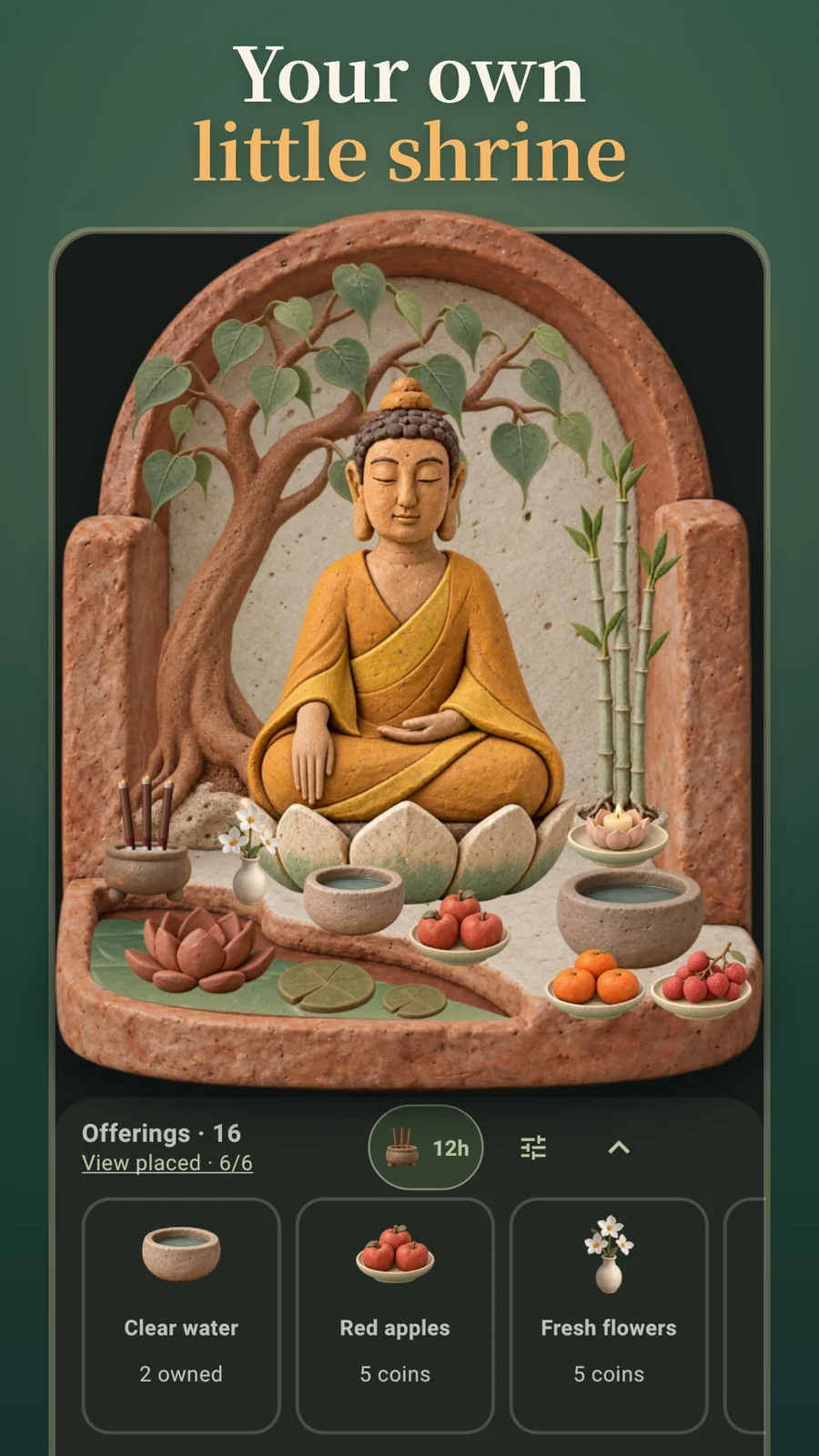
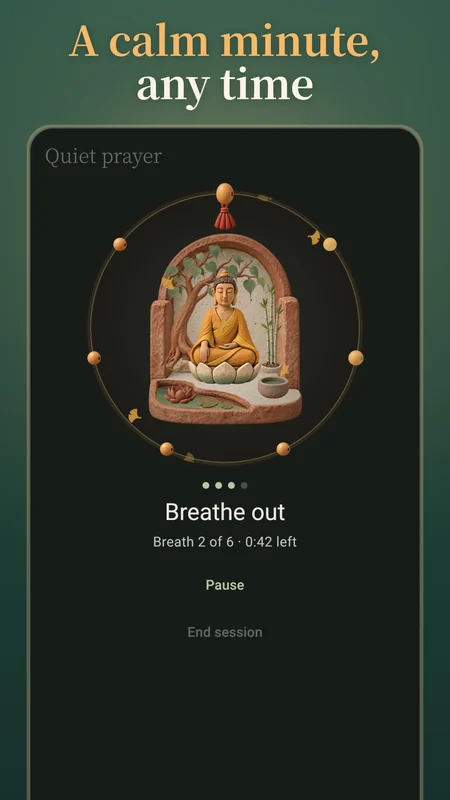
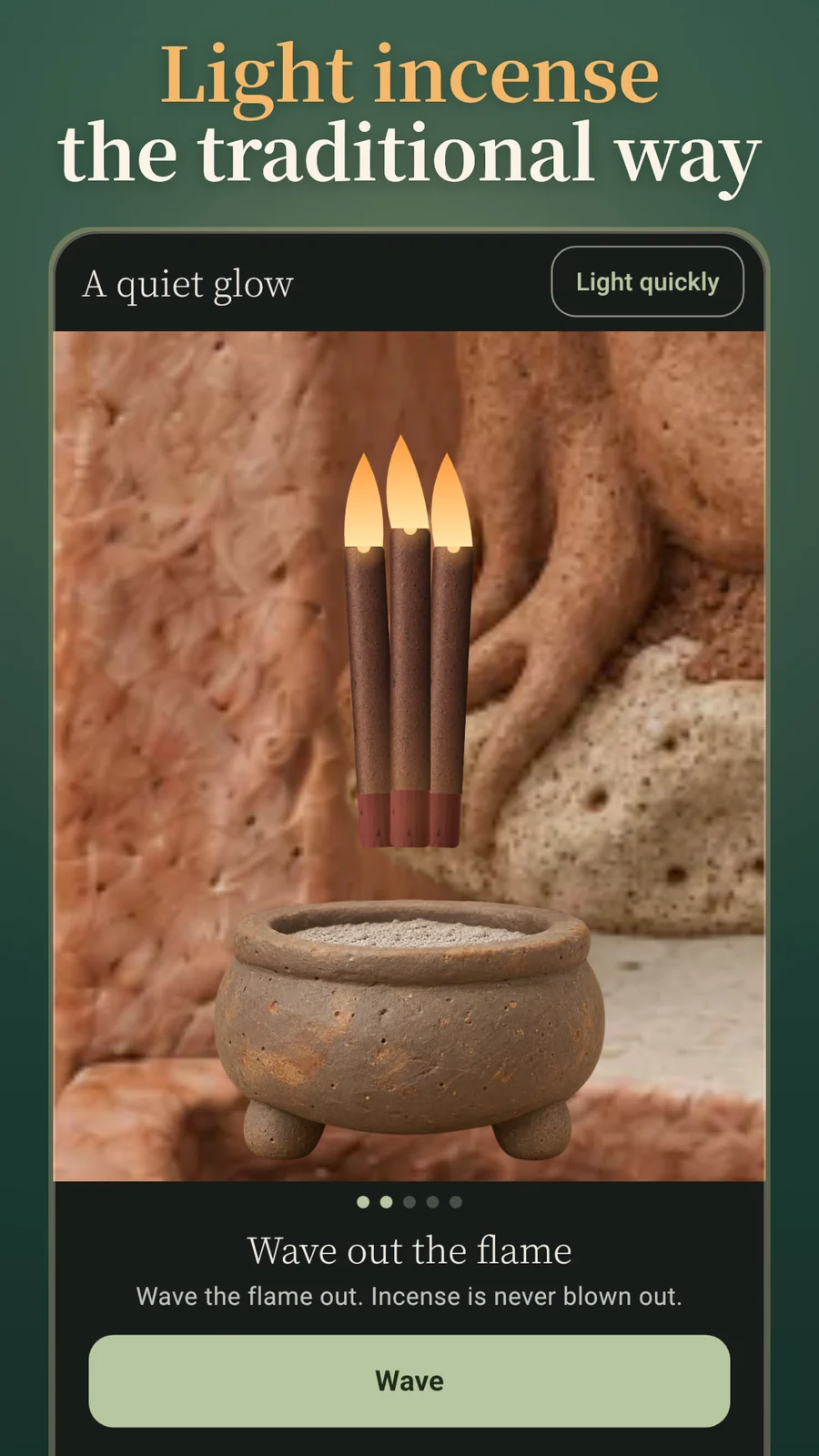
Actual app screens from our Google Play artwork, shown with demo data. Tap an image to enlarge.
How to set up your first Buddha shrine on Android
Make it personal
Buddha and Guanyin draw on Buddhist traditions; Mazu and Caishen on Chinese popular religion; Jizō on Japanese Buddhism; Maneki-neko is a Japanese lucky-cat symbol. These are different histories, not one interchangeable tradition.
Choose decor, gardens, lanterns and water features, then save favorite designs. Offer flowers, tea or virtual incense as a symbolic gesture.
Return at your own pace
A flexible timer, prayer history, forgiving streaks and optional reminders support short or longer moments. Android widgets and live wallpaper keep your shrine nearby; you can also share shrine images.
Basic local prayer and your first guardian are free, without an account, subscription or purchase. Extra content and customization are optional. Coins and purchases do not create spiritual merit or improve the outcome of a wish.
Physical and digital altars aren’t the same.
Think of a phone-based shrine as a supplement or reminder. A virtual Buddhist altar does not reproduce the communal and ritual meaning of a physical shrine. Follow your community’s guidance for formal practice.
05 / A few good questions
Before you begin.
Do I have to be Buddhist?
No. Digital altars can support personal or religious reflection. If you choose an image from an unfamiliar tradition, learn what it represents and approach it respectfully.
Can virtual incense replace physical incense?
It can be a symbolic personal gesture when smoke or flame is impractical. Whether it is appropriate in a formal ritual depends on your tradition and community.
What if I have only one minute?
Start with the one-minute exercise above. No app is needed. A digital shrine can provide a familiar visual focus if that helps you return.
Is Little Shrine free?
Basic local prayer and your first guardian are free, without an account, subscription or purchase. Optional in-app purchases provide additional content and personalization. Payment does not increase blessings or spiritual merit.
Are my prayer words recorded?
Little Shrine does not record your prayer words or private wishes. That does not mean the entire app collects no data: connected features process account and service data, and usage statistics are optional. See the Privacy Policy for details.
Does a virtual shrine guarantee luck or protection?
No. An app cannot guarantee supernatural outcomes, healing, wealth or protection. Little Shrine offers symbolic ritual and personal reflection, and is not affiliated with or endorsed by religious institutions.
A little sacred space, wherever life takes you
Your little ritual can start today.
A moment of gratitude. A quiet wish for someone you love. One intention to carry into your day.
Make room for it, in whatever way feels meaningful to you.
Begin Your Little Shrine — Free on AndroidFree basic local prayer · No account needed
Optional in-app purchases · For ages 13 and up
More guides for your practice
- Little Shrine and Bodhi Timer in airplane mode
- Why are there seven water bowls on some Buddhist altars?
- Why does the Buddha’s birthday fall on different dates?
- Can a phone reminder become a bell of mindfulness?
- How to try Buddhist walking meditation on a short path
- How to begin mettā, the Buddhist practice of loving-kindness
- A first visit to Tsz Shan Monastery in Hong Kong
Sources & editorial notes
- Bhikkhu Khantipalo, Lay Buddhist Practice — Buddhist Publication Society, via Access to Insight. A tradition-specific discussion of home practice and offerings, not an endorsement of digital substitutes.
- FPMT: Altar Set-up & Water Bowl Offerings — Lama Zopa Rinpoche’s teaching on actual and mental offerings in a Tibetan Buddhist context.
- FPMT: Extensive Offerings Around the World — photographs used as supports for offering visualization.
- Product details: Little Shrine’s current listing, checked against app source and existing release imagery. Competitor sources are linked in the comparison.
Written by the Little Shrine team with AI assistance for editing and implementation. Last updated November 18, 2026. No expert religious review is documented. The suggested one-minute exercise is informal personal reflection. No religious endorsement or independent comparative testing is claimed.