
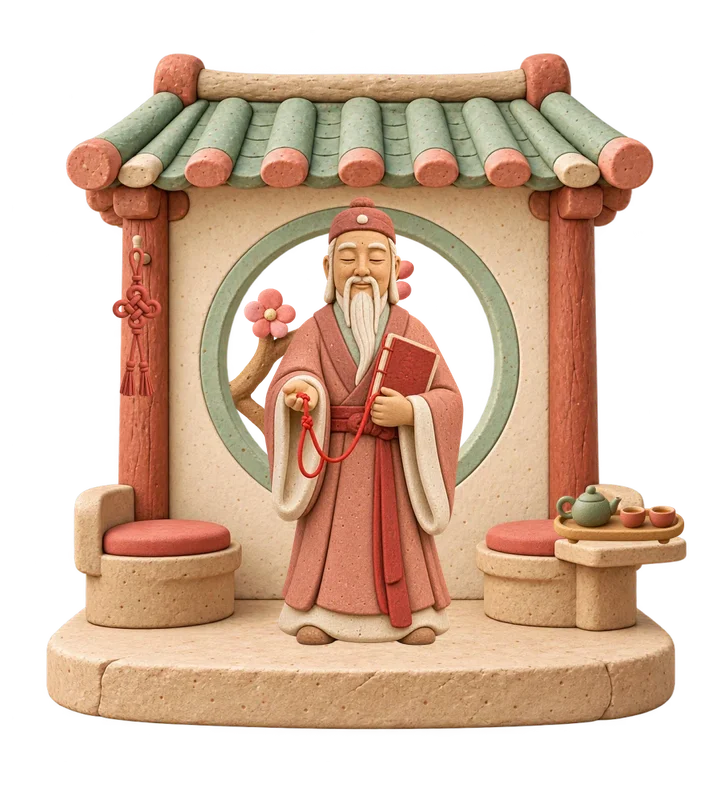
Locate the thread and the marriage book in Little Shrine’s garden. The book suggests matches recorded across time, while the thread draws a connection between two people. The paired teacups are our own way of bringing the scene down to the scale of an ordinary meeting.
The Tang story behind the matchmaking elder
月下老人 · Yuèxià Lǎorén, the Old Man under the Moon
A Tang-dynasty tale attributed to Li Fuyan tells of Wei Gu encountering an old man studying a register by moonlight. The elder knows which people are destined to marry. Red cords bind the feet of future spouses. Wei Gu’s efforts to evade the match give the story its tension: the register contains knowledge its human reader cannot control.
That narrative helps explain why artists give Yue Lao two things to hold. The register represents knowledge of a match, while the cord represents the bond itself. The full name means the old man beneath the moon. It recalls the scene of the encounter, rather than identifying him as a deity who governs the moon’s movements.
In modern Taipei, worship takes place within a wider temple community. The city’s account of Xia-Hai City God Temple describes a visit that also involves the City God’s wife and other figures. A red thread in someone’s hand may therefore recall a specific visit, a request and a hoped-for return to give thanks, as well as a story told more than a millennium ago.