
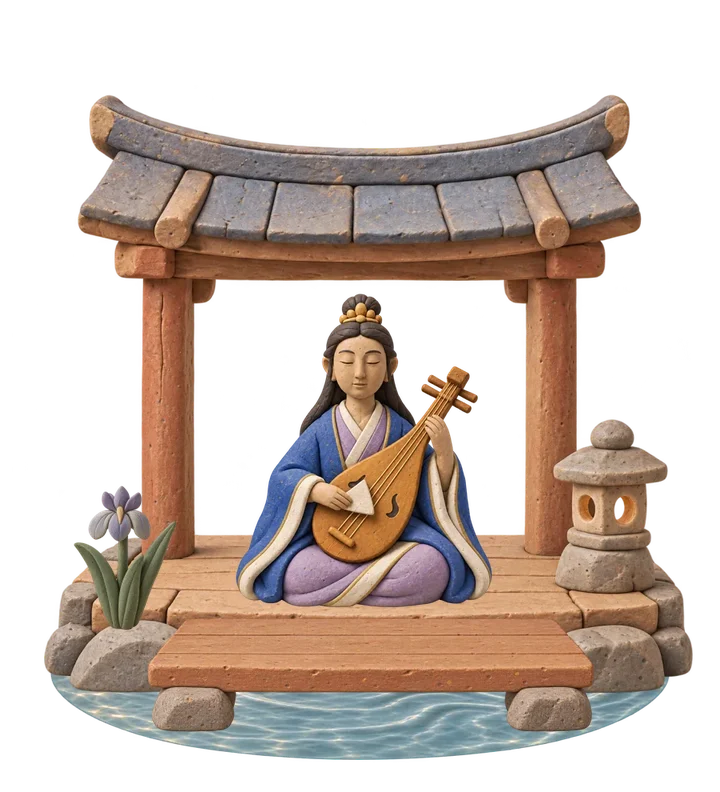
Why students appear in the story
Kōfukuji traces Benzaiten to Sarasvatī and describes her associations with learning, wisdom and music. It points to a temple diary as evidence that people prayed to her for progress in their studies. That record brings a recognizable human concern into a medieval temple setting. Someone seeing Benzaiten among the Seven Gods of Good Fortune today can also understand why an earlier visitor might have approached her with a scholarly ambition.
A memory preserved in a place name
The temple relates a local tradition in which Kūkai invited Benzaiten to Nara. Offerings of rice and rice cakes and seven days of giving are linked in this story with the name of Mochiidono-chō. Kōfukuji presents this as a transmitted account. Read it alongside the diary and the annual service, and three different ways of remembering the figure come into view, through a town name, a written record and the opening of a door.