
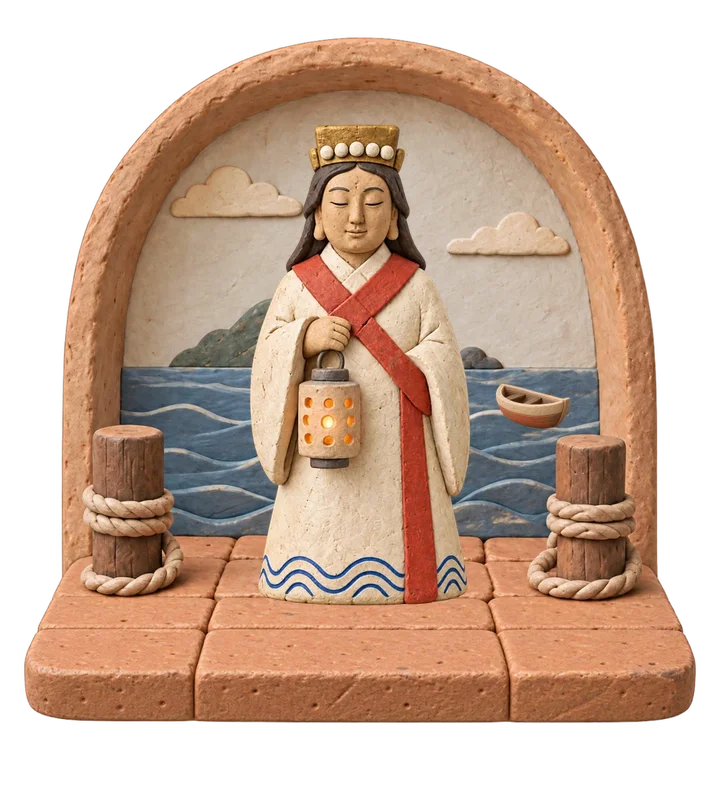
Who makes time for the fair?
UNESCO’s account describes islanders laying aside their usual work, gathering before images of Mazu, making offerings from the sea and taking part in dances and performances. The decision to stop work is worth noticing. People whose days ordinarily follow different demands can meet on a shared religious calendar. Marine offerings also locate the fair in a specific coastal economy, where the water provides food and brings danger.
From an island gathering to a lantern procession
Elsewhere, smaller gatherings for Mazu can include evening processions with lanterns. A light carried through a neighborhood takes devotion beyond the temple door and makes it visible to people along the way. Read alongside the Meizhou fairs, these processions show how the same figure can bring people together at several scales, from a household to an island. UNESCO’s accompanying film offers a way to see the people carrying, performing and watching.