
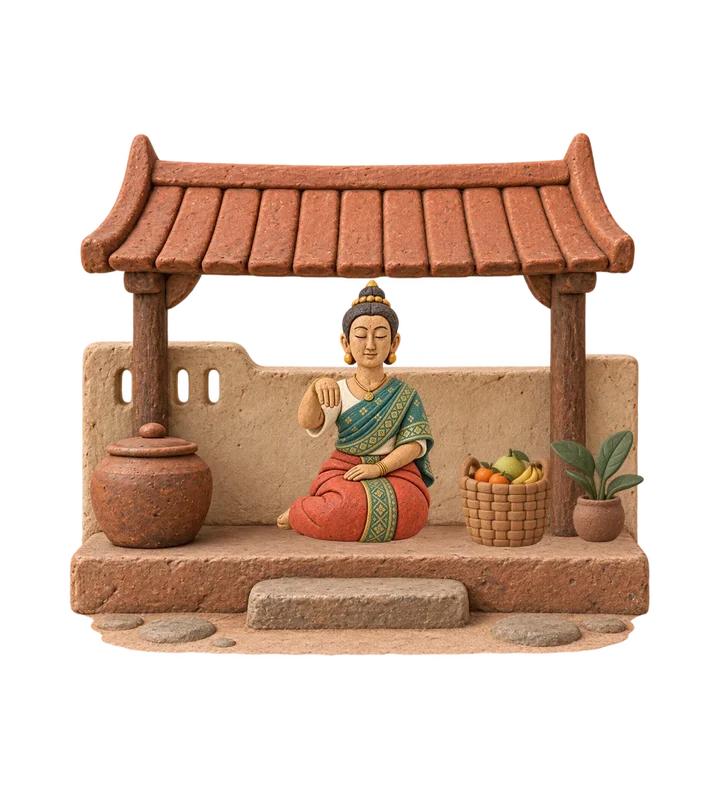
What a trader asks for
In an account published by the Siam Society in 1964, Phya Anuman Rajadhon records an invocation that imagines travelling to trade, handling varied wares and returning with precious goods. Its details tell us something about the person speaking. This is the voice of someone for whom a journey to market could carry both opportunity and uncertainty. The accompanying account names popped rice, flowers, candles and scented paste among daily offerings.
From a portable charm to a shop counter
The Spurlock Museum describes figures kept in places of business as well as offerings of food and water. A charm carried on a trading journey moves with its owner. A figure kept by the counter looks out from the place where seller and customer meet. The same beckoning gesture makes sense in both settings. The older invocation documents one tradition and gives a reader a way to understand the gesture without assuming that every shopkeeper recites the same words.
Look closer
What does Nang Kwak’s beckoning hand mean?
Why might a Thai shop have water or garlands near Nang Kwak?