
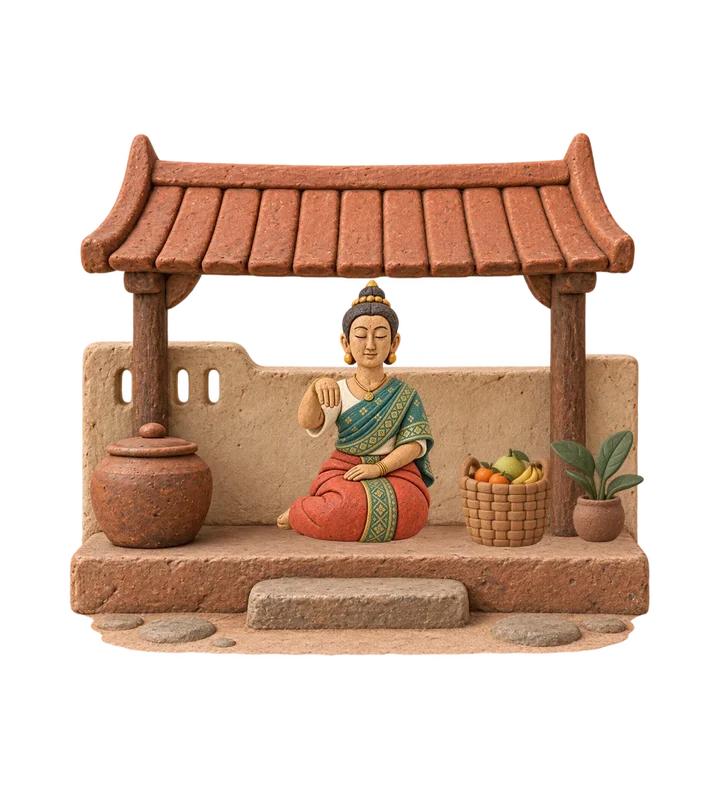
The Spurlock Museum’s amulet is a good place to study that hand on a small object. Little Shrine puts the figure beside a merchant’s produce basket. The basket supplies the setting of trade while the hand supplies the invitation.
A history preserved in amulets and traders’ invocations
นางกวัก · Nang Kwak, the beckoning lady
A hand turned palm down and drawn toward the body is a recognizable invitation in Thailand. Nang Kwak’s name draws attention to that action. Her association with attracting customers places her in the history of everyday trade, where the ability to welcome a passerby matters to the person earning a livelihood behind the counter.
A study published in the Journal of the Siam Society in 1964 records stories and invocations associated with Thai charms. In one traders’ invocation, a speaker describes traveling to trade and voices hopes for a successful exchange. This gives the gesture a voice and a journey. It is evidence for a particular account in circulation, rather than a single date at which the figure was invented.
The Spurlock Museum documents Nang Kwak both as an amulet and as a figure attended with food, water or incense at a house or business. An amulet can accompany its owner on a journey, while a counter figure receives care in a fixed place. Looking at those two scales helps explain how the same beckoning hand could belong to the lives of traveling traders and shopkeepers alike.
Look closer
Why might a Thai shop have water or garlands near Nang Kwak?